The Louis Vuitton Neverfull is one of the most copied handbags in the world, which makes a real vs fake LV Neverfull check essential before you pay for one on eBay, Vinted, Poshmark, Instagram or from a friend of a friend. This guide is for buyers in the US, the UK, Europe and the Gulf who want to understand what an authentic Neverfull usually looks like, where counterfeits commonly slip up, and when to stop guessing and call in a professional.
One important note before we start: Louis Vuitton has changed materials, lining colours, pouches and identification methods over the years. A detail that looks “wrong” may simply belong to a different production period. Use these signs as a screening tool, not as a final verdict.
Quick check: authentic vs common counterfeit tells
| Checkpoint | Authentic (typical) | Common counterfeit tell |
|---|---|---|
| Canvas | Coated canvas with a fine, consistent grain and rich colour | Plasticky shine, flat print, colour too orange or too dark |
| Vachetta trim | Untreated natural cowhide that darkens to honey with use | Pale, painted or plasticky leather that never patinas |
| Stitching | Even, mustard-yellow thread, neatly angled stitches | Uneven spacing, loose ends, bright yellow or orange thread |
| Hardware | Solid golden-tone brass, crisp engravings | Light, coated metal that chips; blurry lettering |
| Heat stamp | Thin, crisp lettering with round “O”s | Thick, smudged or oddly spaced font |
| Date code / chip | Date code (older bags) or no visible code (chipped bags from about 2021) | Code format that doesn’t match the stated year or country |
| Seller | Clear history, receipts, return policy | “Factory outlet” stock, wire/Zelle/gift-card payment only, price far below market |
1. Materials: coated canvas, not leather
The body of a Monogram, Damier Ebene or Damier Azur Neverfull is coated canvas, not leather. Authentic canvas feels firm yet flexible, with a subtle texture and a soft sheen rather than a glossy, plastic look. The brown of the Monogram version should look warm and deep; many counterfeits are either too orange or too muddy when compared side by side with photos on the official Louis Vuitton website.
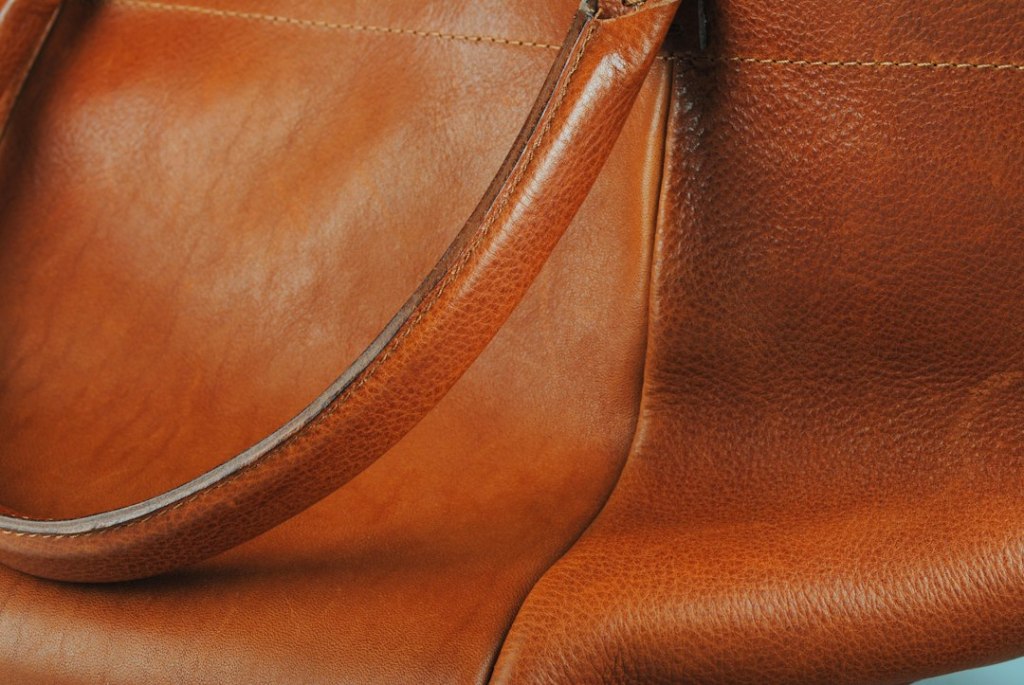
On the Monogram Neverfull, the handles and trim are vachetta – natural, untreated cowhide. New vachetta is pale beige and gradually darkens to a honey colour with sunlight and handling. Counterfeits often use coated or painted leather that stays pale forever, or artificially darkened leather that looks dirty rather than evenly aged. Damier Ebene versions use darker trim, so do not expect patina there.
2. Stitching quality and thread colour
Louis Vuitton stitching on the Neverfull is typically a mustard or ochre-yellow thread, sewn evenly with each stitch slightly angled. Look closely at the handle attachments and the top edges. On an authentic bag, the stitches are consistent in length and tension, and you shouldn’t see loose threads, double-stitched repairs or glue marks.
Online guides sometimes quote exact stitch counts on handle tabs. Because these can vary by size and production period, treat stitch counts as a supporting clue rather than proof.
3. Hardware and engravings
The side laces of the Neverfull cinch through golden-tone metal hooks, and the strap rivets are also metal. Genuine hardware usually feels solid and has a smooth, even finish. Engravings such as “Louis Vuitton” should be sharp and evenly spaced. Counterfeit hardware is often lighter, may show chipping or bubbling, and the engraving can look shallow or blurry.
4. Monogram and pattern alignment
Check the pattern on the front panel. The LV monograms and flowers should look balanced and symmetrical, with logos not awkwardly cut off along the top edge. It is commonly reported that because the Neverfull body is cut from one continuous piece of canvas that folds under the base, the pattern on one side appears upside down. That is normal on many genuine Neverfulls. What should raise questions is a pattern that looks crooked, misaligned at the seams, or printed with fuzzy edges.
5. Heat stamp and font
Inside the bag, a leather patch carries the heat stamp, usually reading “Louis Vuitton Paris” with a “made in” line naming the country. Authenticators commonly point to a few font details: the letter “O” is very round, the “L” has a short tail, and the two “T”s sit close together. The impression should be clean and evenly pressed. Thick, bleeding or uneven letters are a warning sign.
6. Date code or microchip
For many years, Louis Vuitton bags carried a discreet date code, usually stamped on a small leather tab inside the bag. In the common modern format the letters relate to the workshop country and the numbers relate to the production period. A date code is not a serial number and is not proof of authenticity – counterfeiters copy them all the time. What matters is whether the code’s format and country make sense with the rest of the bag.
Around 2021, Louis Vuitton began replacing date codes with embedded NFC microchips. A newer Neverfull may therefore have no visible date code at all, which is normal. These chips are intended for the brand’s own use, so scanning one with a regular phone app does not prove anything. Be wary of any seller who “proves” authenticity with a chip-scanning video.
7. Interior lining and pouch
The Neverfull’s interior is a textile lining whose colour depends on the canvas and the year. Older versions had a striped lining; newer ones use solid colours. Recent MM and GM models usually come with a detachable zipped pouch. Compare the lining colour and pouch style against official product photos for that specific version. Mismatches, cheap-feeling fabric or messy seams are common counterfeit tells.
8. Dust bag, box and paperwork
Louis Vuitton’s dust bags and packaging have changed over time, and counterfeiters copy packaging just as carefully as bags. A dust bag, box, “authenticity card” or printed receipt proves nothing on its own. A genuine purchase receipt matters most when the store details, date and item description match the bag and can be verified.
9. Price and seller red flags
The fastest way to avoid a fake Neverfull is to look at the seller, not just the bag. Be cautious if you see:
- A “brand new” price far below what Louis Vuitton’s official website lists in USD, GBP, EUR or AED.
- Claims of “factory outlet”, “export surplus” or “mirror quality” stock.
- Pressure to pay upfront by wire transfer, Zelle, crypto, gift cards or PayPal “Friends and Family”, with no buyer protection or return policy.
- Stock photos copied from the brand website instead of photos of the actual bag.
- A seller who refuses an independent authentication before payment.
Remember that counterfeits aren’t a harmless shortcut. Selling counterfeit goods is illegal in the US, the UK, the EU and the Gulf states, customs officers regularly seize fake designer goods at borders and airports, and counterfeit production is widely linked to poor labour conditions.
When to get a professional authentication
Online tips cannot guarantee authenticity. High-quality counterfeits can pass several of the checks above. Get a professional opinion if the bag costs a significant amount, if you are buying pre-owned, or if even one detail feels off. The safest options are buying directly from a Louis Vuitton store or the official Louis Vuitton website, or using a reputable professional authentication service that physically inspects the bag and stands behind its result.
FAQ
Does every real Neverfull have a date code?
No. Bags made after Louis Vuitton switched to microchips (around 2021) usually have no visible date code. Very old bags may also lack one.
Is an upside-down monogram on the back a sign of a fake?
Not by itself. It is commonly reported that the Neverfull uses one continuous piece of canvas, so one side shows the pattern upside down.
Can a phone NFC app verify the LV microchip?
No public app can confirm authenticity this way. Treat chip-scan “proof” from a seller with suspicion.
Will Louis Vuitton authenticate a bag for me?
Policies vary by country and store, so ask your nearest boutique. Otherwise, use a reputable professional authentication service.
Bottom line
A real Neverfull shows consistent quality everywhere: canvas, vachetta, stitching, hardware and heat stamp. A single “perfect” detail doesn’t make a bag genuine, and one odd detail doesn’t always make it fake. Buy from Louis Vuitton directly or verify through a professional before you pay.
This guide is for general awareness. For a definitive answer, use the brand or a professional authentication service. Real or Fake Bags is not affiliated with Louis Vuitton or any brand mentioned.
💬 Join the conversation
Have you ever been offered a Neverfull that looked too good to be true? Tell us in the comments below:
- Where did you see it – eBay, Vinted, Poshmark, Instagram, or a market abroad?
- Which check in this guide do you find the hardest to judge: canvas, vachetta, stitching or the heat stamp?
- Own a genuine Neverfull? Share one detail you’d tell a first-time buyer to look for.
We read every comment and reply to questions. If this guide helped you, tap Like ❤️ and share it with a friend before they buy – it might save them a lot of money.
Please keep comments helpful and respectful. Links to replica sellers or requests to buy fakes will be removed.


Leave a Reply